Within Spielberg
When Movie Aliens Became Wondrous
Spielberg helped move screen aliens away from pure invasion fears toward wonder, empathy and communication.
On this page
- Cold War invasion traditions
- Spielberg's softer contact model
- The influence on later alien stories
Page outline Jump by section
Introduction
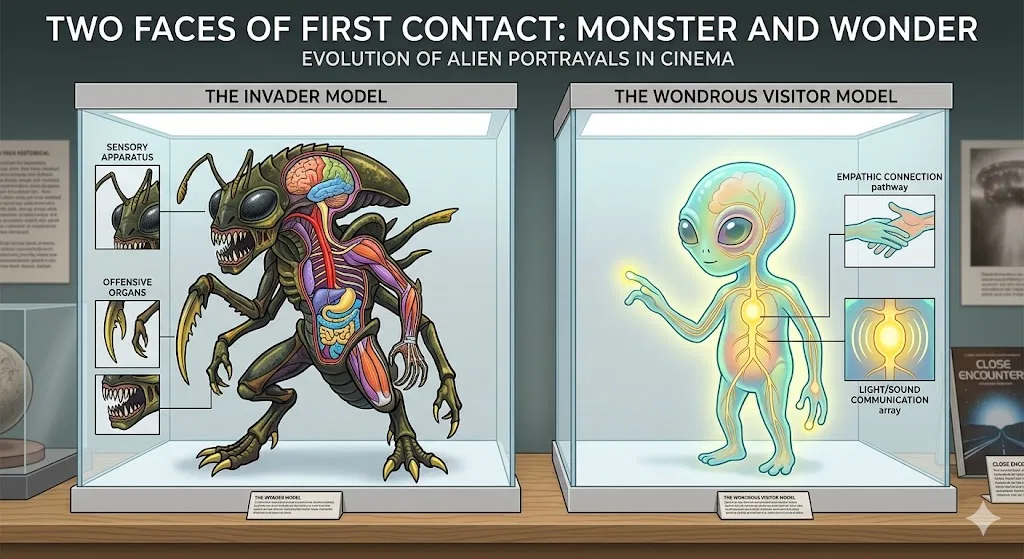
Steven Spielberg did not invent the friendly screen alien, but he gave it its most influential modern grammar. Before Close Encounters of the Third Kind and E.T. the Extra-Terrestrial, many popular alien films treated extraterrestrials as invaders, judges or monsters shaped by Cold War fears. Spielberg shifted the centre of gravity: the alien encounter could be frightening at first, yet still lead towards wonder, empathy, music, childhood trust and communication. The change mattered because it made “first contact” feel less like a military emergency and more like a moral test of human openness.
That hopeful model did not replace darker alien cinema. Alien, The Thing, Independence Day and Spielberg’s own War of the Worlds kept fear alive. But after Spielberg, the benevolent or unknowable alien became a mainstream emotional possibility rather than an occasional exception. Later stories such as Starman, The Iron Giant, Super 8 and Arrival show how durable that shift became: the mystery from the sky could ask us not only whether we would survive, but whether we could listen.
The Cold War Made Aliens Look Like Threats
The classic 1950s alien-invasion cycle grew from a world already trained to imagine sudden catastrophe. Flying saucers, nuclear weapons, civil-defence drills and anti-communist paranoia all fed a style of science fiction in which the outside force was rarely just “from space”. It could stand for atomic annihilation, ideological infiltration, invasion from beyond national borders, or a fear that human technology had outpaced human wisdom. Cambridge’s account of 1950s science-fiction cinema describes the period as a “golden age” of the genre and notes the industry’s embrace of flying saucers alongside a cycle of alien-invasion films.[cambridge]resolve.cambridge.orgUniversity Press & Assessment2SCIENCE FICTION FILMS IN THE 1950sThe film industry embraced the 'flying saucer' and, in parallel to the contin- ued reports of UFO sight… University Press & Assessment
That tradition did not always make aliens simple villains, but it often made contact a crisis. Encyclopedia.com summarises the Cold War pattern neatly: science-fiction films tended to merge fear of communist takeover with fear of annihilation, especially through invasion from outside forces.[Encyclopedia.com]encyclopedia.comScience Fiction Films and Cold War AnxietyScience fiction films tended to merge the fear of a Communist takeover with the fear of annihil… In that framework, the alien ship was a signal to mobilise. The important questions were defensive: who are they, what do they want, and how quickly can the state, the military or the scientist stop them?
There were exceptions before Spielberg, and they matter because they show that hope was already present — just not dominant. The Day the Earth Stood Still (1951) gives Earth a humanoid visitor, Klaatu, who arrives with a warning against violence and nuclear recklessness. Britannica describes the film as a Cold War and atomic-age classic, while its story makes the alien less a conqueror than a stern messenger confronting humanity’s self-destructive habits.[Encyclopedia Britannica]britannica.comEncyclopedia BritannicaThe Day the Earth Stood Still | Sci-Fi, Cold War, ClassicSeptember 23, 2010 — 7 days ago — American science-fictio… The film’s hope is conditional: humans may join a wider peaceful order, but only under threat of punishment if they carry their aggression into space.
That is the key pre-Spielberg contrast. Earlier hopeful aliens often arrived as judges, prophets or superior moral authorities. Spielberg’s aliens, especially in Close Encounters and E.T., are different. They do not mainly lecture humanity from above. They invite response. They turn fear into attention, and attention into contact.
Spielberg’s Softer Contact Model
Close Encounters of the Third Kind changed the emotional route of the UFO film. Its early scenes still use fear: blinding lights, power failures, missing time, terrified witnesses and official secrecy. Yet the film keeps moving away from invasion logic. The UFOs are not softened by making them cute or familiar; they remain overwhelming, unknowable and sublime. What changes is the meaning of that awe. The encounter is not a prelude to conquest. It is a summons to communication.
The film’s connection to UFO culture was unusually direct. The American Film Institute’s production history notes that Columbia bought the rights to J. Allen Hynek’s The UFO Experience and hired Hynek as technical adviser after a rights dispute over the phrase “close encounters”.[AFI Catalog]catalog.afi.comAFI CatalogClose Encounters of the Third Kind (1977) - AFI CatalogA settlement resulted in Columbia purchasing the rights to Hynek's book… That mattered because Hynek’s taxonomy gave the film a quasi-investigative frame: witnesses, reports, classifications and a scientific search for patterns. Spielberg used those materials not to make a documentary, but to make belief feel emotionally serious.
The decisive invention is the five-note conversation. At Devil’s Tower, humanity does not defeat the visitors, decode their weapons or expose their plan. It answers them. Light, sound and gesture become a shared language. The film’s climax imagines contact as a performance of mutual patience: humans trying to match alien signals, aliens responding, both sides building a bridge without ordinary speech. BFI’s appreciation of the film points to how easily the smiling alien and farewell might have become ridiculous, but argues that John Williams’s score and Spielberg’s control make the ending emotionally persuasive rather than silly.[BFI]bfi.org.ukSource details in endnotes.
That tonal achievement is easy to underestimate. Close Encounters asks viewers to accept a huge emotional turn: the terrifying unknown becomes beautiful without becoming fully explained. Spielberg’s alien is not “safe” in a domestic sense; people are abducted, families are disrupted, Roy Neary’s obsession is damaging. But the film’s final movement insists that contact can enlarge human life. The alien other is not reduced to a monster, a target or a metaphor for enemy ideology.
The American Film Institute later captured Spielberg’s broader achievement by saying he reimagined space aliens as “wondrous figures of hope” in Close Encounters and E.T.[American Film Institute]afi.comSource details in endnotes. That phrase is useful because it does not mean the aliens are simply nice. “Wondrous” keeps the strangeness intact. Spielberg’s hope depends on mystery.
E.T. Brought Cosmic Hope Into the Home
If Close Encounters made alien contact majestic, E.T. the Extra-Terrestrial made it intimate. The alien no longer arrives as a glowing force in the sky but as a frightened, stranded body in a child’s world. The film keeps the science-fiction premise, yet its emotional structure is closer to a story of friendship, loneliness and rescue. AFI’s Movie Club describes E.T. as a family classic about a diminutive alien hiding in the suburbs with children’s help.[American Film Institute]afi.comSource details in endnotes.
The shift is crucial. In many invasion films, the alien tests the competence of institutions: armies, governments, laboratories. In E.T., institutions are the danger. Adults in protective suits, medical equipment and state authority become frightening because they cannot see the alien as Elliott sees him: vulnerable, intelligent, homesick and capable of love. The hopeful alien story becomes a test of empathy from below, not command from above.
The Library of Congress’s National Film Registry entry for E.T. records that the film was added in 1994, placing it among works preserved for their recognised cultural value.[The Library of Congress]blogs.loc.govreading the film registry e t the extra terrestrial 1982reading the film registry e t the extra terrestrial 1982 That institutional afterlife reflects how completely Spielberg’s alien image entered public memory: the glowing fingertip, the bicycle flight, the phrase “phone home”, the farewell. These are not images of invasion. They are images of connection across species.
E.T. also softened the visual code of the alien. The creature is wrinkled, odd and sometimes alarming, but his design allows vulnerability to dominate. His otherness invites care. That changed what later filmmakers could do with extraterrestrial bodies. A non-human figure did not need to become conventionally beautiful or human-like to earn sympathy; it needed behaviour, fragility and an emotional bond.
What Actually Changed After Spielberg
The Spielberg effect was not a simple before-and-after switch from bad aliens to good aliens. It was a widening of the genre’s emotional range. After Close Encounters and E.T., mainstream audiences had a powerful template for three linked ideas: extraterrestrials could be mysterious without being evil, communication could be more important than combat, and children or emotionally open outsiders might understand contact better than official experts.
Several later films show the pattern in different keys:
- The alien as traveller rather than invader. Starman (1984) turns contact into a road movie and romance. Its alien comes to Earth after encountering humanity’s Voyager message, then learns human behaviour through a relationship rather than a war. The plot’s connection to the Voyager Golden Record matters: NASA describes the real 1977 record as a greeting to possible extraterrestrials, a public act of cosmic address that fits the same hopeful imagination of contact.[NASA Science]science.nasa.govScience Golden Record GreetingsScience Golden Record Greetings
- The alien-like figure as misunderstood weapon. The Iron Giant (1999) is set in 1957, directly inside the Cold War mood that earlier invasion films expressed. Yet its central extraterrestrial robot becomes a child’s friend, and the drama turns on whether fear will force a gentle being to become the weapon others assume it is. Indiana University’s film blog highlights the film’s concern with friendship, belonging and the violence that follows misunderstanding.[IU Blogs]blogs.iu.eduBlogs True Friendship in The Iron Giant – Establishing ShotBlogs True Friendship in The Iron Giant – Establishing Shot
- The Spielberg mode as homage. Super 8 (2011) openly returns to late-1970s and early-1980s Spielberg territory: children, suburbia, secrecy, danger, wonder and alien mystery. Vanity Fair described it as an homage to Spielberg films, especially E.T. and Close Encounters.[Vanity Fair]vanityfair.comSource details in endnotes. Its alien is more frightening than E.T., but the surrounding grammar — children seeing what adults mishandle, mystery hidden under government control, awe emerging from fear — belongs to the post-Spielberg tradition.
- Communication as the whole plot. Arrival (2016) is not a Spielberg imitation, but it is easier to understand in a film culture where contact can be contemplative rather than militarised. Its drama centres on a linguist trying to communicate with extraterrestrials before human panic turns into violence. Film Comment described the film as offering thoughtful ideas about cinema, language and empathy, while Wired detailed the elaborate design of its alien writing system.[Film Comment]filmcomment.comSource details in endnotes.
These examples do not prove direct one-to-one influence in every case. They show something broader: Spielberg helped make the hopeful encounter commercially and emotionally available. Later filmmakers could choose fear, tenderness, awe, romance, grief or language without having to treat the alien as only a target.
Hope Did Not Mean Naivety
The hopeful alien tradition is sometimes misread as sentimental optimism. Spielberg’s strongest UFO films are more complicated than that. Close Encounters is full of broken trust, state secrecy, psychological distress and family collapse. E.T. includes abandonment, illness, surveillance and the threat of scientific captivity. Their hope is not that humans are naturally kind. It is that kindness has to be chosen against fear.
That distinction explains why Spielberg could later make War of the Worlds without contradicting his earlier work. His 2005 film returns to alien invasion as terror, survival and social breakdown. Reports and production accounts around the film emphasise that Spielberg saw it as the opposite of Close Encounters: an alien picture with “no love and no attempt at communication”.[Wikipedia]WikipediaWar of the Worlds (2005 filmWar of the Worlds (2005 film The contrast clarifies the earlier films. Spielberg was not saying aliens must be benevolent. He was exploring what changes when contact is imagined as relationship rather than annihilation.
The darker turn also shows that alien stories remain tied to their historical moment. The 1950s invasion cycle reflected nuclear and ideological fears; War of the Worlds resonated with post-9/11 vulnerability; Arrival belongs to an era anxious about global mistrust, language failure and escalation. Hopeful aliens are therefore not an escape from history. They are one way of arguing with history’s reflex towards suspicion.
Why Spielberg’s Hopeful Aliens Endure
Spielberg’s hopeful aliens endure because they solve a lasting problem in UFO and alien storytelling: how to keep the unknown genuinely strange while making contact emotionally meaningful. If aliens are too human, the wonder collapses. If they are only monstrous, the story narrows into survival. Spielberg’s answer was to make the alien encounter a staged act of perception. The viewer has to learn how to look, listen and respond.
That is why light and sound matter so much in Close Encounters, and why touch matters so much in E.T. These films do not begin with fluent translation. They begin with partial signals: tones, colours, gestures, mimicry, healing, fear, recognition. Communication is not a given; it is built scene by scene. This is the hopeful idea beneath the spectacle: peace is not automatic, but contact becomes possible when humans stop treating the unknown only as a threat.
The influence is visible in the kinds of alien stories that now feel normal. A film about extraterrestrials can be a grief drama, a language puzzle, a children’s adventure, a romance, a coming-of-age story or a parable about militarised fear. Spielberg did not erase the invasion film. He made room beside it for the wondrous contact film: a branch of science fiction where the alien is not the end of the world, but an invitation to become less provincial, less frightened and more capable of wonder.
Amazon book picks
Further Reading
Books and field guides related to When Movie Aliens Became Wondrous. Use these as the next step if you want deeper reading beyond the article.
Close Encounters of the Third Kind
Explains how Spielberg transformed UFO encounters into stories of communication and wonder.
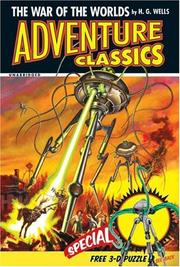
The War of the Worlds
Represents the hostile alien tradition that Spielberg's hopeful vision helped counterbalance.
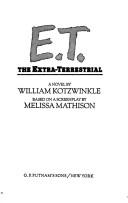
E.T., the Extra-Terrestrial
Embodies the compassionate and child-centred alien model discussed on the page.
The Science Fiction Hall of Fame -- Volume One
Provides broader context for changing depictions of extraterrestrials across science fiction.
eBay marketplace picks
Marketplace Samples
Example marketplace items related to this page. Use the search link to explore similar finds on eBay.



Endnotes
1.
Source: resolve.cambridge.org
Title: University Press & Assessment2
Link:https://resolve.cambridge.org/core/services/aop-cambridge-core/content/view/4F77995811535B3CA2ACD5BD78ACDAEB/9780748628704c2_p29-74_CBO.pdf/science-fiction-films-in-the-1950s.pdf
Source snippet
SCIENCE FICTION FILMS IN THE 1950sThe film industry embraced the 'flying saucer' and, in parallel to the contin- ued reports of UFO sight...
2.
Source: encyclopedia.com
Link:https://www.encyclopedia.com/arts/culture-magazines/science-fiction-films-and-cold-war-anxiety
Source snippet
Science Fiction Films and Cold War AnxietyScience fiction films tended to merge the fear of a Communist takeover with the fear of annihil...
3.
Source: britannica.com
Link:https://www.britannica.com/topic/The-Day-the-Earth-Stood-Still-film-1951
Source snippet
Encyclopedia BritannicaThe Day the Earth Stood Still | Sci-Fi, Cold War, ClassicSeptember 23, 2010 — 7 days ago — American science-fictio...
Published: September 23, 2010
4.
Source: catalog.afi.com
Link:https://catalog.afi.com/Film/67160-CLOSE-ENCOUNTERS-OF-THE-THIRD-KIND
Source snippet
AFI CatalogClose Encounters of the Third Kind (1977) - AFI CatalogA settlement resulted in Columbia purchasing the rights to Hynek's book...
5.
Source: bfi.org.uk
Link:https://www.bfi.org.uk/features/why-i-love-close-encounters-third-kind
6.
Source: afi.com
Link:https://www.afi.com/laa/steven-spielberg/
7.
Source: afi.com
Title: [e t]({{ ‘e-t/’ | relative_url }}) the extra terrestrial afi movie club
Link:https://www.afi.com/news/e-t-the-extra-terrestrial-afi-movie-club/
8.
Source: science.nasa.gov
Title: Science Golden Record Greetings
Link:https://science.nasa.gov/mission/voyager/golden-record-contents/greetings/
9.
Source: science.nasa.gov
Title: voyager golden record overview
Link:https://science.nasa.gov/mission/voyager/voyager-golden-record-overview/
10.
Source: wired.com
Link:https://www.wired.com/2016/11/arrivals-designers-crafted-mesmerizing-alien-alphabet
11.
Source: Wikipedia
Title: War of the Worlds (2005 film)
Link:https://en.wikipedia.org/wiki/War_of_the_Worlds_%282005_film%29
12.
Source: Wikipedia
Link:https://en.wikipedia.org/wiki/1950s
13.
Source: Wikipedia
Title: Close (2022 film)
Link:https://en.wikipedia.org/wiki/Close_%282022_film%29
14.
Source: Wikipedia
Title: Close Encounters of the Third Kind
Link:https://en.wikipedia.org/wiki/Close_Encounters_of_the_Third_Kind
15.
Source: Wikipedia
Title: Starman (film)
Link:https://en.wikipedia.org/wiki/Starman_%28film%29
16.
Source: Wikipedia
Title: Arrival (film)
Link:https://en.wikipedia.org/wiki/Arrival_%28film%29
17.
Source: Wikipedia
Title: E.T. the Extra Terrestrial
Link:https://en.wikipedia.org/wiki/E.T._the_Extra-Terrestrial
18.
Source: Wikipedia
Title: The Day the Earth Stood Still
Link:https://en.wikipedia.org/wiki/The_Day_the_Earth_Stood_Still
19.
Source: Wikipedia
Title: Voyager Golden Record
Link:https://en.wikipedia.org/wiki/Voyager_Golden_Record
20.
Source: Wikipedia
Title: National Film Registry
Link:https://en.wikipedia.org/wiki/National_Film_Registry
21.
Source: Wikipedia
Title: The Iron Giant
Link:https://en.wikipedia.org/wiki/The_Iron_Giant
22.
Source: kids.britannica.com
Title: The Day the Earth Stood Still
Link:https://kids.britannica.com/students/article/The-Day-the-Earth-Stood-Still/626622
23.
Source: history.com
Link:https://www.history.com/topics/1950s
24.
Source: silver.afi.com
Link:https://silver.afi.com/movies/detail/0100000773
25.
Source: time.com
Title: stranger things netflix references
Link:https://time.com/4436008/stranger-things-netflix-references/
26.
Source: blogs.loc.gov
Title: reading the film registry e t the extra terrestrial 1982
Link:https://blogs.loc.gov/now-see-hear/2018/11/reading-the-film-registry-e-t-the-extra-terrestrial-1982/
27.
Source: blogs.iu.edu
Title: Blogs True Friendship in The Iron Giant – Establishing Shot
Link:https://blogs.iu.edu/establishingshot/2023/05/29/true-friendship-in-the-iron-giant/
28.
Source: vanityfair.com
Link:https://www.vanityfair.com/hollywood/2011/06/is-super-8-a-cross-between-et-and-the-goonies-and-24-other-urgent-questions
29.
Source: filmcomment.com
Link:https://www.filmcomment.com/film-week-arrival/
30.
Source: jhwikicollection-20.fandom.com
Title: Close Encounters of the Third Kind
Link:https://jhwikicollection-20.fandom.com/wiki/Close_Encounters_of_the_Third_Kind
31.
Source: culture.fandom.com
Title: Close Encounters of the Third Kind
Link:https://culture.fandom.com/wiki/Close_Encounters_of_the_Third_Kind
32.
Source: memorabilia-uk.co.uk
Title: close encounters of the third kind
Link:https://www.memorabilia-uk.co.uk/p/close-encounters-of-the-third-kind
33.
Source: thebestpictureproject.wordpress.com
Title: close encounters of the third kind
Link:https://thebestpictureproject.wordpress.com/2012/02/29/close-encounters-of-the-third-kind/
34.
Source: filmsite.org
Title: National Film Registry
Link:https://www.filmsite.org/filmreg.html
35.
Source: cacd.uscourts.gov
Link:https://www.cacd.uscourts.gov/newsworthy/historical-decades/1950s
36.
Source: bfidatadigipres.github.io
Title: close encounters of the third kind
Link:https://bfidatadigipres.github.io/member%20picks/2022/02/23/close-encounters-of-the-third-kind/
Additional References
37.
Source: ebsco.com
Link:https://www.ebsco.com/research-starters/film/day-earth-stood-still-film
Source snippet
The Day the Earth Stood Still (film) | Film | Research StartersThe story follows Klaatu, a humanoid alien who arrives on Earth with...
38.
Source: loc.gov
Link:https://www.loc.gov/static/programs/national-film-preservation-board/documents/close_encounters.pdf
39.
Source: loc.gov
Link:https://www.loc.gov/programs/national-film-preservation-board/film-registry/complete-national-film-registry-listing/
40.
Source: youtube.com
Title: Close Encounters of the Third Kind: Meeting the aliens
Link:https://www.youtube.com/watch?v=zijo1NLwR5A
Source snippet
Close Encounters of the Third Kind: He leaves Earth with the aliens...
41.
Source: cinephiliabeyond.org
Link:https://cinephiliabeyond.org/close-encounters-of-the-third-kind-steven-spielbergs-gamble-that-paid-off-generously/
42.
Source: inverse.com
Link:https://www.inverse.com/entertainment/super-8-15-year-anniversary-[disclosure-day
43.
Source: researchgate.net
Link:https://www.researchgate.net/publication/232958649_Cold_War_Fears_Cold_War_Passions_Conservatives_And_Liberals_Square_Off_in_1950s_Science_Fiction
44.
Source: researchgate.net
Link:https://www.researchgate.net/publication/318354252_Alien_Invasions_and_Identity_Crisis_Steven_Spielberg%27s_The_War_of_the_Worlds_2005
45.
Source: facebook.com
Link:https://www.facebook.com/groups/12117541695/posts/10161972934591696/
46.
Source: d-nb.info
Link:https://d-nb.info/1105478149/34
Topic Tree