Within Spielberg
What Spielberg Changed About Alien Fear
Spielberg's hopeful UFO films are clearer when set against earlier alien-invasion stories shaped by fear.
On this page
- Alien invasion before Close Encounters
- Fear, paranoia and Cold War mood
- Why wonder felt like a reversal

Page outline Jump by section
Introduction
Before Steven Spielberg made UFO contact feel luminous in Close Encounters of the Third Kind, many American alien films treated the sky as a threat zone. The dominant pre-Spielberg pattern was not “What if they want to talk?” but “What if they are already invading, replacing us, or proving that our weapons cannot save us?” That mood came from the early Cold War: nuclear fear, anti-communist suspicion, UFO sightings, space-race anxiety and a culture trained to imagine catastrophe arriving with little warning. Science-fiction films of the 1950s repeatedly turned those pressures into alien invasion, mind control, mutation and near-annihilation stories.[Encyclopedia.com]encyclopedia.comScience Fiction Films and Cold War Anxiety | Encyclopedia.comScience Fiction Films and Cold War Anxiety | Encyclopedia.com
This matters because Spielberg’s hopeful UFO cinema was not created in a vacuum. Its wonder is clearer when set against films in which the unknown usually meant invasion, contamination, loss of identity or military emergency. Close Encounters did not simply add better effects or a warmer tone; it reversed an older emotional grammar.
Alien invasion before Close Encounters
The 1950s were the decisive period for the alien-invasion grammar that Spielberg later softened and redirected. Hollywood did not invent fear of the unknown, but it found a particularly efficient Cold War shape for it: the alien as an external enemy, a hidden infiltrator, a superior military power, or a force that makes ordinary society suddenly untrustworthy.
The War of the Worlds in 1953 made the invasion literal. Byron Haskin’s film, produced by George Pal and based on H. G. Wells’s novel, relocates the catastrophe into a modern American setting and opens with Martians needing a new home and choosing Earth for conquest. The American Film Institute’s catalogue notes the film’s October 1953 release, its science-fiction classification, and its framing of the Martians’ arrival as an invasion; it also records the film’s acclaimed special effects and its later connection to Spielberg’s 2005 remake.[AFI Catalog]catalog.afi.comCatalog AFI|CatalogAFI CatalogAFI|Catalog…
That film’s power comes from helpless escalation. Local curiosity becomes military mobilisation; weapons fail; technology cannot interpret the enemy quickly enough; ordinary landscape turns into a battlefield. It is not a film about shared language or mutual recognition. The first assumption is conflict, and the central question is whether Earth can survive.
The Thing from Another World in 1951 offered a more enclosed version of the same anxiety. Its setting is a military-scientific outpost near the North Pole, where an alien presence turns isolation into siege. The BFI identifies the film as a 1951 American production directed by Christian I. Nyby, produced by Howard Hawks and featuring Kenneth Tobey, Margaret Sheridan and Robert Cornthwaite, while other film histories have long treated it as one of the early templates for the besieged-outpost alien film.[BFI]bfi.org.ukthe thing from another worldThe Thing from Another World (1951) | BFI…
The difference between these films and Spielberg’s later UFO imagination is stark. In the earlier pattern, contact usually narrows human options: fight, flee, expose the infiltrator, or wait for rescue. In Close Encounters, contact widens the field: fear remains, but it becomes the start of interpretation. Lights, sounds and repeated images are not only threats; they are clues.
Fear, paranoia and Cold War mood
Cold War alien cinema drew on several overlapping fears rather than one simple political code. Nuclear destruction mattered, but so did espionage, conformity, technological rivalry and the suspicion that a neighbour, parent or official might no longer be what they seemed.
A useful way to see this is through Invasion of the Body Snatchers in 1956. Its alien threat does not arrive as a fleet blasting cities. It comes through sleep, duplication and social trust. The Library of Congress essay on the film describes it as part of a wider explosion of science fantasy and science horror fuelled by “the atomic age, advent of space rocketry, and Cold War anxieties”. In the story, seed pods take over real people while retaining their physical appearance but transforming their personalities; once the pod is ready, sleep becomes surrender.[The Library of Congress]loc.govThe Library of Congress Invasion of the Body SnatchersThe Library of Congress Invasion of the Body Snatchers
That premise turned Cold War fear inward. The terrifying question was no longer only whether an outside enemy could attack America, but whether America could be hollowed out from within. The Library of Congress essay is careful about interpretation: it says the film functions as an allegory in the blacklist era, but asks “an allegory of what?” It can be read as a familiar Cold War warning against communism turning neighbours into drones, yet also as a critique of postwar American conformity and emotional deadening.[The Library of Congress]loc.govThe Library of Congress Invasion of the Body SnatchersThe Library of Congress Invasion of the Body Snatchers
That ambiguity is exactly why the film endured. The pod people are frightening because they are legible in more than one direction. They can suggest communist collectivism, suburban sameness, corporate blandness, political obedience, psychiatric normalisation, or any system that promises peace at the price of feeling. The alien is not merely “the other”; it is the fear that the self can be replaced.
Invaders from Mars in 1953 makes the same fear more childlike and immediate. The BFI describes the film as a favourite of directors including Spielberg and Martin Scorsese, and summarises its premise: young David MacLean sees a flying saucer descend behind his house, then watches his father return from investigating with a changed personality and a mark on his neck. Soon other adults show the same signs.[BFI]bfi.org.ukOpen source on bfi.org.uk.
Here the invasion begins at home. The father becomes cold and hostile; adults can no longer be trusted; the child’s testimony sounds impossible. The BFI explicitly places the film in the McCarthyism and Red Scare years, noting that its hostile Mars also carried an obvious association with America’s Cold War rival through the planet’s colour symbolism.[BFI]bfi.org.ukthe thing from another worldThe Thing from Another World (1951) | BFI…
These films were not all identical, but they shared a nervous structure:
- The sky becomes a warning system. A saucer, meteor or unexplained object is rarely neutral. It signals emergency.
- Communication breaks down. Human attempts to understand the visitors are either too late, militarised, or punished.
- The body becomes politically unstable. Radiation, mutation, duplication and mind control make identity vulnerable.
- Institutions become both necessary and suspect. Scientists, soldiers, police and doctors may save the day, miss the danger, or become part of it.
- The ordinary world becomes uncanny. Small towns, homes and highways stop being safe places and become invasion corridors.
That pattern explains why pre-Spielberg alien fear was not just fear of monsters. It was fear of systems failing: families, science, government, language, perception and the body itself.
The partial exception that proves the rule
Not every pre-Spielberg alien film was a simple invasion nightmare. The Day the Earth Stood Still in 1951 is the crucial exception because its alien visitor, Klaatu, arrives with a warning rather than a conquest plan. The AFI catalogue summarises the film’s final argument: Klaatu tells Earth that other planets live in peace under robot guardians empowered to act against aggression, and that humanity must choose between peaceful membership and obliteration.[AFI Catalog]catalog.afi.comCatalog AFI|CatalogAFI CatalogAFI|Catalog…
Yet even this more peace-minded film is wrapped in Cold War coercion. Klaatu’s message is anti-aggression, but it is backed by overwhelming force. His arrival in Washington, D.C. is met by soldiers and weapons, and the story turns on whether a fearful Earth can hear a warning before reacting violently. Modern summaries often identify the film with the early nuclear arms race, and its continuing interest lies in that tension: the alien is wiser than humanity, but the film’s peace still depends on the threat of superior power.[Wikipedia]WikipediaThe Day the Earth Stood StillThe Day the Earth Stood Still
That makes The Day the Earth Stood Still a bridge rather than a full anticipation of Spielberg. It imagines an alien who can speak morally to humanity, but the emotional atmosphere is still judgement, ultimatum and discipline. By contrast, Close Encounters makes the final encounter feel less like a tribunal and more like a performance of mutual recognition. The visitors are not here to conquer or police Earth; they are here to communicate.
Why wonder felt like a reversal
Spielberg’s UFO films feel hopeful because they redirect the old Cold War machinery. Close Encounters still contains ingredients from earlier alien cinema: frightened witnesses, military secrecy, scientific apparatus, mass confusion, strange lights and a government response that keeps ordinary people at a distance. The difference is where those ingredients lead.
The AFI notes that Spielberg’s film took its title from J. Allen Hynek’s UFO classification system, that Columbia bought rights to Hynek’s The UFO Experience, and that Hynek was hired as a technical adviser. It also records that Spielberg’s earlier working title, Watch the Skies, came from a line in The Thing from Another World, a revealing link back to the fearful 1950s tradition.[AFI Catalog]catalog.afi.comCatalog AFI|CatalogAFI CatalogAFI|Catalog…
That title history is almost a miniature map of the change. “Watch the skies” is a warning. “Close encounters” is a taxonomy of contact. The first phrase belongs to invasion anxiety; the second belongs to observation, classification and the possibility of experience that can be studied rather than simply repelled.
Spielberg did not remove fear from UFO cinema. The lights in Close Encounters can be terrifying. Roy Neary’s life is destabilised. The government behaves secretively. But fear is no longer the final meaning of the unknown. The unknown becomes an invitation to decode: musical tones, hand signals, sculpted visions, repeated shapes, shared compulsion.
That reversal only fully registers against the older films. In The War of the Worlds, the arrival from space exposes human military weakness. In Invasion of the Body Snatchers, it destroys individuality from within. In Invaders from Mars, it corrupts the family and the adult world. In The Thing from Another World, it turns scientific discovery into survival horror. In Close Encounters, the arrival still overwhelms human systems, but the climax imagines that the right response might be listening.
What Spielberg changed about alien fear
The pre-Spielberg alien film often used extraterrestrials as Cold War pressure made visible. The invader could stand for communism, nuclear annihilation, conformity, enemy technology, social breakdown or the terrifying possibility that modern science had opened doors humanity could not control. These films were not crude propaganda in a single direction; the strongest of them are more interesting because their fears are unstable and multi-purpose.
Spielberg’s decisive change was emotional rather than merely ideological. He kept the awe and uncertainty but shifted the default expectation from invasion to encounter. Earlier films asked whether humanity could survive the alien. Spielberg asked whether humanity could understand it.
That is why Close Encounters felt so different in 1977. It arrived after decades in which flying saucers had often meant attack, infiltration or warning. Spielberg’s great reversal was to make the UFO not a symbol of inevitable catastrophe, but a test of human receptiveness. The sky was still strange. It was no longer automatically hostile.

Amazon book picks
Further Reading
Books and field guides related to What Spielberg Changed About Alien Fear. Use these as the next step if you want deeper reading beyond the article.
The UFO Experience
Represents the transition from fear and speculation toward investigation and contact.
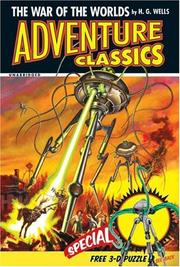
The War of the Worlds
Provides the invasion template against which Spielberg's more hopeful vision can be contrasted.
The Close Encounters Man
Helps explain the shift from Cold War paranoia to Spielberg-era wonder.
The Flying Saucers Are Real
Captures the cultural atmosphere that informed Cold War alien fears.
eBay marketplace picks
Marketplace Samples
Example marketplace items related to this page. Use the search link to explore similar finds on eBay.

Endnotes
1.
Source: encyclopedia.com
Title: Science Fiction Films and Cold War Anxiety | Encyclopedia.com
Link:https://www.encyclopedia.com/arts/culture-magazines/science-fiction-films-and-cold-war-anxiety
2.
Source: catalog.afi.com
Title: Catalog AFI|Catalog
Link:https://catalog.afi.com/Film/51100-THE-WAR-OF-THE-WORLDS?cxt=filmography
Source snippet
AFI CatalogAFI|Catalog...
3.
Source: bfi.org.uk
Title: the thing from another world
Link:https://www.bfi.org.uk/film/c7351443-0f5f-567f-88d9-2a7ba77b5cd8/the-thing-from-another-world
Source snippet
The Thing from Another World (1951) | BFI...
4.
Source: bfi.org.uk
Link:https://www.bfi.org.uk/features/invaders-from-mars-alien-invasion-movie
5.
Source: catalog.afi.com
Title: Catalog AFI Catalog
Link:https://catalog.afi.com/Film/50072-THE-DAYTHEEARTHSTOODSTILL
Source snippet
Each planet is guarded by a robot that impartially acts against aggression, and the inhabitants live in peace, Klaatu states, with...Rea...
6.
Source: Wikipedia
Title: The Day the Earth Stood Still
Link:https://en.wikipedia.org/wiki/The_Day_the_Earth_Stood_Still
7.
Source: afi.com
Title: the day the earth stood still afi movie club
Link:https://www.afi.com/news/the-day-the-earth-stood-still-afi-movie-club/
Source snippet
American Film InstituteTHE DAY THE EARTH STOOD STILL (1951) – AFI Movie...19 Sept 2024 — A cautionary tale about man's inhumanity and hu...
8.
Source: catalog.afi.com
Title: 67160 CLOSE ENCOUNTERS OF THE THIRD KIND
Link:https://catalog.afi.com/Film/67160-CLOSE-ENCOUNTERS-OF-THE-THIRD-KIND
9.
Source: catalog.afi.com
Title: 56556 INVASION OF THE BODY SNATCHERS
Link:https://catalog.afi.com/Film/56556-INVASION-OF-THE-BODY-SNATCHERS?cxt=filmography
10.
Source: catalog.afi.com
Title: 51874 INVASION OF THE BODY SNATCHERS
Link:https://catalog.afi.com/Film/51874-INVASION-OF-THE-BODY-SNATCHERS?cxt=filmography
11.
Source: Wikipedia
Link:https://en.wikipedia.org/wiki/1950s
12.
Source: Wikipedia
Title: List of science fiction films of the 1950s
Link:https://en.wikipedia.org/wiki/List_of_science_fiction_films_of_the_1950s
13.
Source: Wikipedia
Title: Invasion of the Body Snatchers
Link:https://en.wikipedia.org/wiki/Invasion_of_the_Body_Snatchers
14.
Source: Wikipedia
Title: Close Encounters of the Third Kind
Link:https://en.wikipedia.org/wiki/Close_Encounters_of_the_Third_Kind
15.
Source: Wikipedia
Title: The War of the Worlds (1953 film)
Link:https://en.wikipedia.org/wiki/The_War_of_the_Worlds_%281953_film%29
16.
Source: Wikipedia
Title: Earth vs. the Flying Saucers
Link:https://en.wikipedia.org/wiki/Earth_vs._the_Flying_Saucers
17.
Source: Wikipedia
Title: Invaders from Mars (1953 film)
Link:https://en.wikipedia.org/wiki/Invaders_from_Mars_%281953_film%29
18.
Source: history.com
Link:https://www.history.com/topics/1950s
19.
Source: history.com
Title: UF Os and Alien Invasions in Film
Link:https://www.history.com/articles/ufos-and-alien-invasions-in-film
20.
Source: loc.gov
Title: The Library of Congress Invasion of the Body Snatchers
Link:https://www.loc.gov/static/programs/national-film-preservation-board/documents/invasion_body.pdf
21.
Source: jhwikicollection-20.fandom.com
Title: Close Encounters of the Third Kind
Link:https://jhwikicollection-20.fandom.com/wiki/Close_Encounters_of_the_Third_Kind
22.
Source: youtube.com
Link:https://www.youtube.com/watch?v=QB9-Ng25VIU
23.
Source: youtube.com
Link:https://www.youtube.com/watch?v=bg58bW1oZRo
24.
Source: youtube.com
Link:https://www.youtube.com/watch?v=Xz0Ym1wVxTM
25.
Source: youtube.com
Link:https://www.youtube.com/watch?v=K9PIXe8Z_Jk
26.
Source: letterboxd.com
Title: invasion of the body snatchers
Link:https://letterboxd.com/film/invasion-of-the-body-snatchers/
27.
Source: bfidatadigipres.github.io
Title: close encounters of the third kind
Link:https://bfidatadigipres.github.io/member%20picks/2022/02/23/close-encounters-of-the-third-kind/
Additional References
28.
Source: ebsco.com
Link:https://www.ebsco.com/research-starters/history/thing-another-world-film
Source snippet
The Thing from Another World (film) | HistoryThe film's premise, that a space alien menaces a military-scientific outpost near the N...
29.
Source: youtube.com
Link:https://www.youtube.com/watch?v=epRyUAXWo9k
Source snippet
1952 - Invasion, U.S.A. - Push a button, and cities vanish! Cold-War thriller film...
30.
Source: youtube.com
Title: Nuclear Nightmares and Alien Invasions: Scifi in USA during the Cold War
Link:https://www.youtube.com/watch?v=TypAFO1XDlI
Source snippet
Why This 1956 Alien Invasion Film Still Terrifies Viewers Today...
31.
Source: youtube.com
Link:https://www.youtube.com/watch?v=xIV2rG7NoSU
Source snippet
This Disturbing 1953 Sci-Fi Film Still Gives People Chills...
32.
Source: youtube.com
Link:https://www.youtube.com/watch?v=mwh-4ThihbE
Source snippet
NEW HD RESTORATION Target Earth (1954) COLD WAR SCI-FI FULL MOVIE...
33.
Source: loc.gov
Link:https://www.loc.gov/programs/national-film-preservation-board/film-registry/films-not-yet-named-to-the-registry/
34.
Source: cinephiliabeyond.org
Link:https://cinephiliabeyond.org/close-encounters-of-the-third-kind-steven-spielbergs-gamble-that-paid-off-generously/
35.
Source: researchgate.net
Link:https://www.researchgate.net/publication/232958649_Cold_War_Fears_Cold_War_Passions_Conservatives_And_Liberals_Square_Off_in_1950s_Science_Fiction
36.
Source: researchgate.net
Link:https://www.researchgate.net/publication/318354252_Alien_Invasions_and_Identity_Crisis_Steven_Spielberg%27s_The_War_of_the_Worlds_2005
37.
Source: researchgate.net
Link:https://www.researchgate.net/publication/354906835_Robert_Wise%27s_The_Day_the_Earth_Stood_Still_1951_and_Interplanetary_Emissary_Klaatu_Are_Not_Anti-Atomic_A_Reassessment_of_the_Filmic_Evidence
Topic Tree